Introduction: Why The Lean Startup Is Essential for Modern Entrepreneurs
Starting a business has never been easier—but succeeding has never been harder.
Many startups fail not because of lack of effort, but because they build products nobody wants.
That’s exactly the problem The Lean Startup aims to solve.
In this in-depth review by UpBooks, we’ll break down:
- What The Lean Startup is about
- The core framework (Build-Measure-Learn)
- Key lessons for entrepreneurs
- Real-world applications
- Pros and cons
- Whether it’s worth reading
If you’re building a startup, launching a product, or running an e-commerce business, this book can completely change how you approach growth.
About the Author: Eric Ries



4
Eric Ries is an entrepreneur and startup advisor who developed the Lean Startup methodology after experiencing failure in his own startup journey.
His work focuses on reducing waste, improving efficiency, and helping startups succeed faster by testing ideas before scaling.
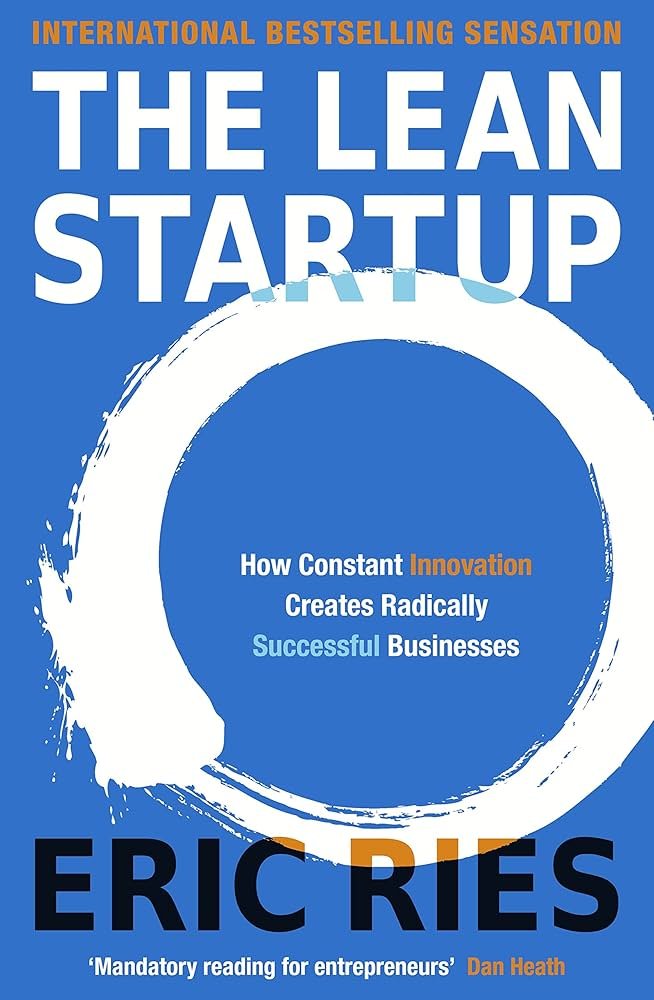
What Is The Lean Startup About?


4
The Lean Startup introduces a new way of building businesses based on:
Continuous innovation, rapid experimentation, and validated learning.
Instead of spending months (or years) building a perfect product, the book encourages entrepreneurs to:
- Launch quickly
- Test ideas early
- Learn from real users
- Improve continuously
The goal is simple:
👉 Avoid wasting time and money on ideas that don’t work
The Core Concept: Build-Measure-Learn Loop
At the heart of the book is one powerful framework:
🔁 Build → Measure → Learn
This loop helps startups move fast while reducing risk.
1. Build (Create a Minimum Viable Product)
Instead of building a full product, you create an MVP (Minimum Viable Product).
This is the simplest version of your idea that allows you to test it with real users.
Example:
- A basic Shopify store
- A landing page
- A simple prototype
The goal is not perfection—it’s speed and learning.
2. Measure (Collect Data)
Once your product is live, you measure how users interact with it.
Focus on real data:
- Conversions
- User behavior
- Retention
- Sales
Avoid vanity metrics like:
- Likes
- Page views (without conversion)
3. Learn (Make Decisions)
Based on data, you decide:
- Pivot (change direction)
- or
- Persevere (continue improving)
This learning process helps you avoid building something nobody wants.
Validated Learning: The Real Goal
The book introduces the concept of:
Validated learning
Instead of guessing what customers want, you test your assumptions with real data.
This approach helps entrepreneurs:
- Reduce risk
- Save money
- Build products that people actually need
Why Most Startups Fail (According to The Lean Startup)
Many startups fail because they:
- Spend too much time planning
- Build products without testing demand
- Ignore customer feedback
- Scale too early
The Lean Startup approach fixes this by focusing on:
- Speed
- Feedback
- Adaptation
Why Entrepreneurs Should Read The Lean Startup
This book is especially powerful for:
- Startup founders
- E-commerce sellers
- SaaS builders
- Product creators
It helps you:
- Validate ideas before investing heavily
- Avoid costly mistakes
- Launch faster
- Build scalable systems
For example, if you’re running a Shopify store, you can:
- Test products quickly
- Analyze performance
- Scale winning products
- Kill losing ones fast
Key Lessons from The Lean Startup
Here are the most important takeaways:
1. Start Small, Learn Fast
Don’t wait for perfection.
Launch early and improve based on feedback.
2. Data > Opinions
Decisions should be based on real user data, not assumptions.
3. Pivot When Necessary
If something isn’t working, change direction quickly.
4. Avoid Waste
Time and money are limited.
Focus only on what creates value.
5. Build What Customers Actually Want
The market decides success—not your idea.
Real-World Applications
You can apply Lean Startup principles in:
E-commerce
- Test products with small budgets
- Use data to scale winning items
SaaS
- Launch beta versions
- Gather user feedback
Content Creation
- Test content formats
- Analyze engagement
Pros and Cons
Pros
- Practical and actionable
- Reduces startup risk
- Applicable to many industries
- Focuses on real-world testing
Cons
- Some concepts repeat
- Slightly technical for beginners
- Less focus on branding or marketing
Is The Lean Startup Worth It?
Yes—especially if you’re building or planning a business.
This book can save you:
- Time
- Money
- Effort
By helping you avoid building the wrong product.
Who Should Read This Book?
This book is ideal for:
- Entrepreneurs
- Startup founders
- Amazon FBA sellers
- Dropshippers
- Product creators
If you’re launching anything, this book is a must-read.
Final Verdict from UpBooks
At UpBooks, we focus on books that deliver real-world value.
The Lean Startup is not just theory—it’s a framework you can apply immediately.
It teaches you:
- How to think like a smart entrepreneur
- How to reduce risk
- How to build efficiently
If you’re serious about building a business, this book deserves a place in your library.